

Latest [Jan 23, 2022] 100% Passing Guarantee - Brilliant Desktop-Specialist Exam Questions PDF
Desktop-Specialist Certification – Valid Exam Dumps Questions Study Guide! (Updated 150 Questions)
NEW QUESTION 18
Which of the following are the options to export the data used to build the view / visualisations?
- A. JSON format
- B. MS Access Database
- C. CSV file
- D. PDF File
Answer: B
Explanation:
Explanation
You can export the data in a Tableau data source, including all or part of the records from your original data.
Alternatively, you can export only the portion of data used to generate the view.
Since the question mentions the data used to build the view, we'll focus on that :
*Export data in the view to Microsoft Access or .csv*
Export the data that is used to generate the view as an Access database (Windows only) or .csv file (Mac only).
1) In Tableau Desktop, select Worksheet > Export > Data.
2) Select a location and type a name for your Access database or .csv file.
3) Click Save.
4) If you're on Windows, the Export Data to Access dialog box displays to give you the option to immediately use the new Access database and continue working in Access without interrupting your work flow.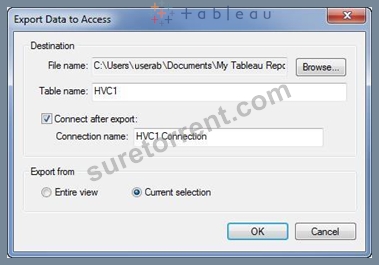
NEW QUESTION 19
What is a story point in Tableau?
- A. A collection of worksheets
- B. A single worksheet or dashboard
- C. A collection of dashboards
- D. A collection of both worksheets and dashboards
Answer: B
Explanation:
Explanation
In Tableau, a story is a sequence of visualizations that work together to convey information. You can create stories to tell a data narrative, provide context, demonstrate how decisions relate to outcomes, or to simply make a compelling case.
A story is a sheet, so the methods you use to create, name, and manage worksheets and dashboards also apply to stories (for more details, see Workbooks and Sheets). At the same time, a story is also a collection of sheets, arranged in a sequence. Each individual sheet (worksheet or dashboard) in a story is called a story point.
When you share a story -for example, by publishing a workbook to Tableau Public, Tableau Server, or Tableau Online-users can interact with the story to reveal new findings or ask new questions of the data.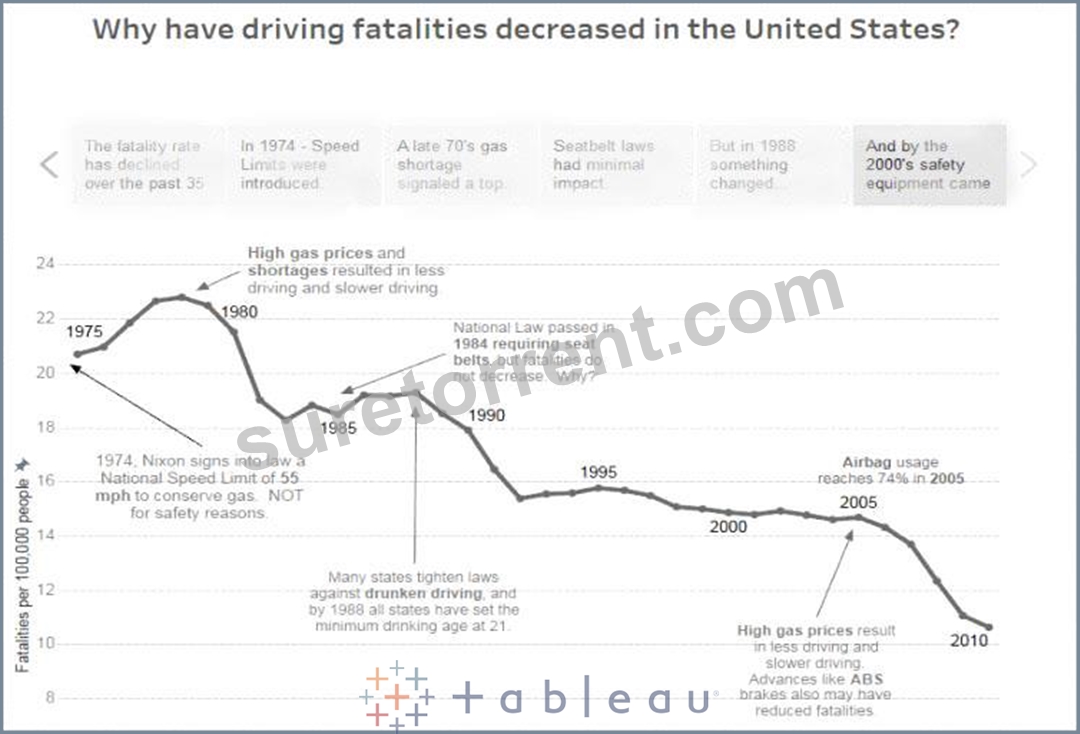
NEW QUESTION 20
Question 45: Skipped
You have just created a histogram and now want to be able to change the size of bins dynamically. Using which of the following will easily satisfy your requirement?
- A. Sets
- B. Parameters
- C. Groups
- D. Calculation
Answer: B
Explanation:
Explanation
A parameter is a global placeholder value such as a number, date, or string that can replace a constant value in a calculation, filter, or reference line.
For example, you may create a calculated field that returns True if Sales is greater than $500,000 and otherwise returns False. You can replace the constant value of "500000" in the formula with a parameter.
Then, using the parameter control, you can dynamically change the threshold in your calculation.
For example -
NEW QUESTION 21
Which of the following would you use to edit the Shape, colour, and Text of your visualisations?
- A. Filter Shelf
- B. Data Pane
- C. Marks Card
- D. Analytics Pane
Answer: C
Explanation:
Explanation
The Marks Card allows us not only to edit the Shape, Text and Colour, but also to modify the Tooltip and the level of detail of the visualisation!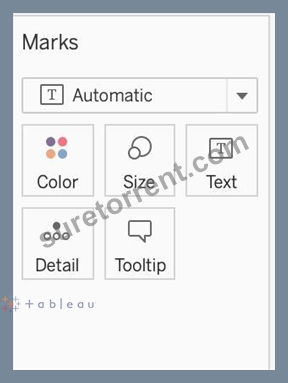
The Marks card is a key element for visual analysis in Tableau. As you drag fields to different properties in the Marks card, you add context and detail to the marks in the view.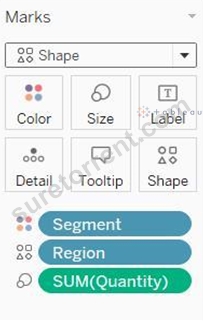
You use the Marks card to set the mark type (see Change the Type of Mark in the View), and to encode your data with color, size, shape, text, and detail. To change the mark settings, see Control the Appearance of Marks in the View.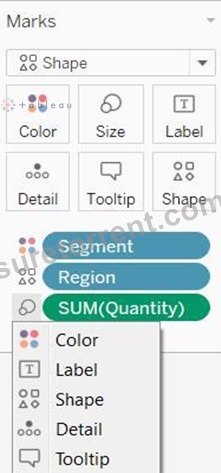
In this example, three different fields have been dragged to different properties in the Marks card. Segment is on Color, Region is on Shape, and Quantity is on Size.
After you add a field to the Marks card, you can click the icon next to the field to change the property it is using. You can also click the property buttons in the Marks card to change those settings.
Many properties can have multiple fields. For example, you can add multiple fields to Label, Detail, Tooltip, and Color. Size and Shape can only have one field at a time. For more details, see Control the Appearance of Marks in the View.
NEW QUESTION 22
Using the CoffeeChain table, create a chart to see the monthly Percent difference change in Profit, from the beginning of 2012 to the end of 2013. How many months saw a Negative percent difference in Profit?
- A. 0
- B. 1
- C. 2
- D. 3
Answer: B
Explanation:
Explanation
Follow along to reach the correct answer:
1) First, drag Date to the Column shelf and Profit to the Rows shelf. We need to see the 2 consecutive months over this two year period (2012-2013) so this tells us we need to work with continuous dates:
Click on Date in the Column shelf and convert it to continuous month :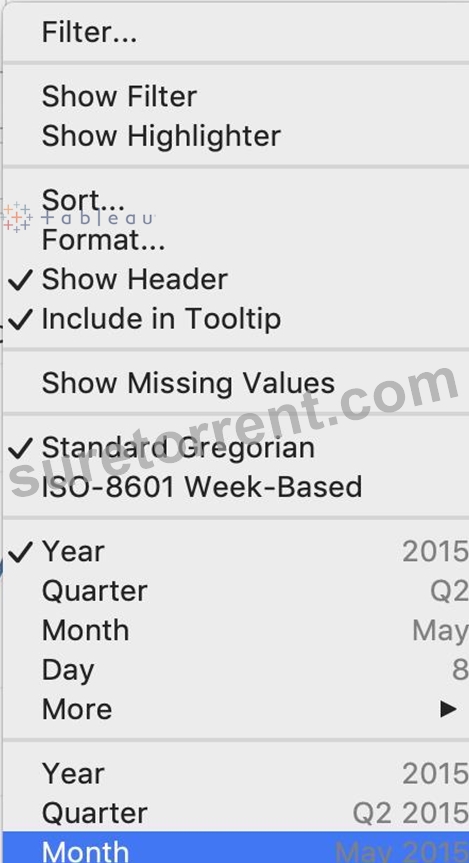
2) Now, click on the Profit pill in the Rows shelf, go to quick table calculation and choose Percent difference: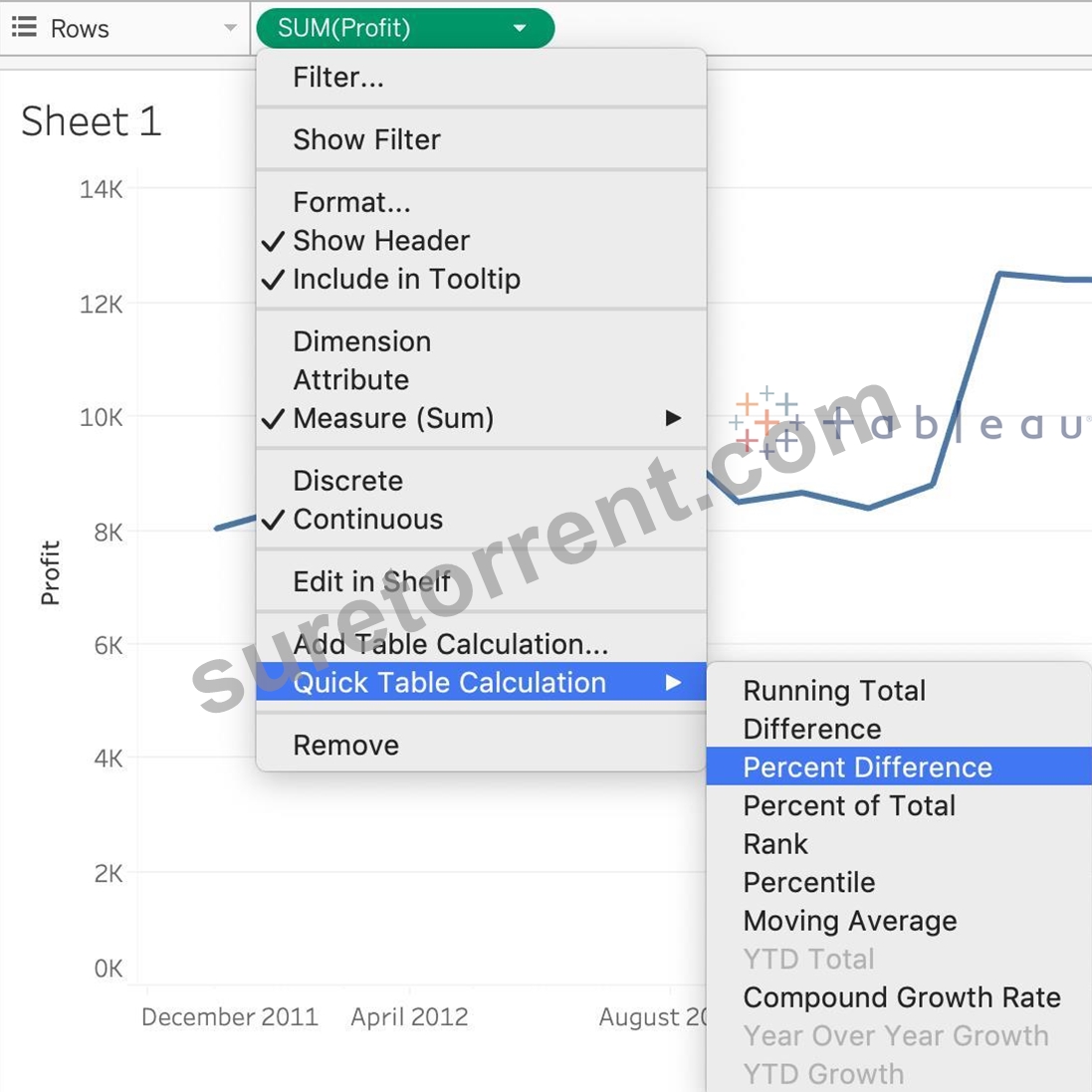
3) Finally, click on the Show mark Labels icon:
4) We finally have our view, and clearly, 10 Months have a NEGATIVE percent difference: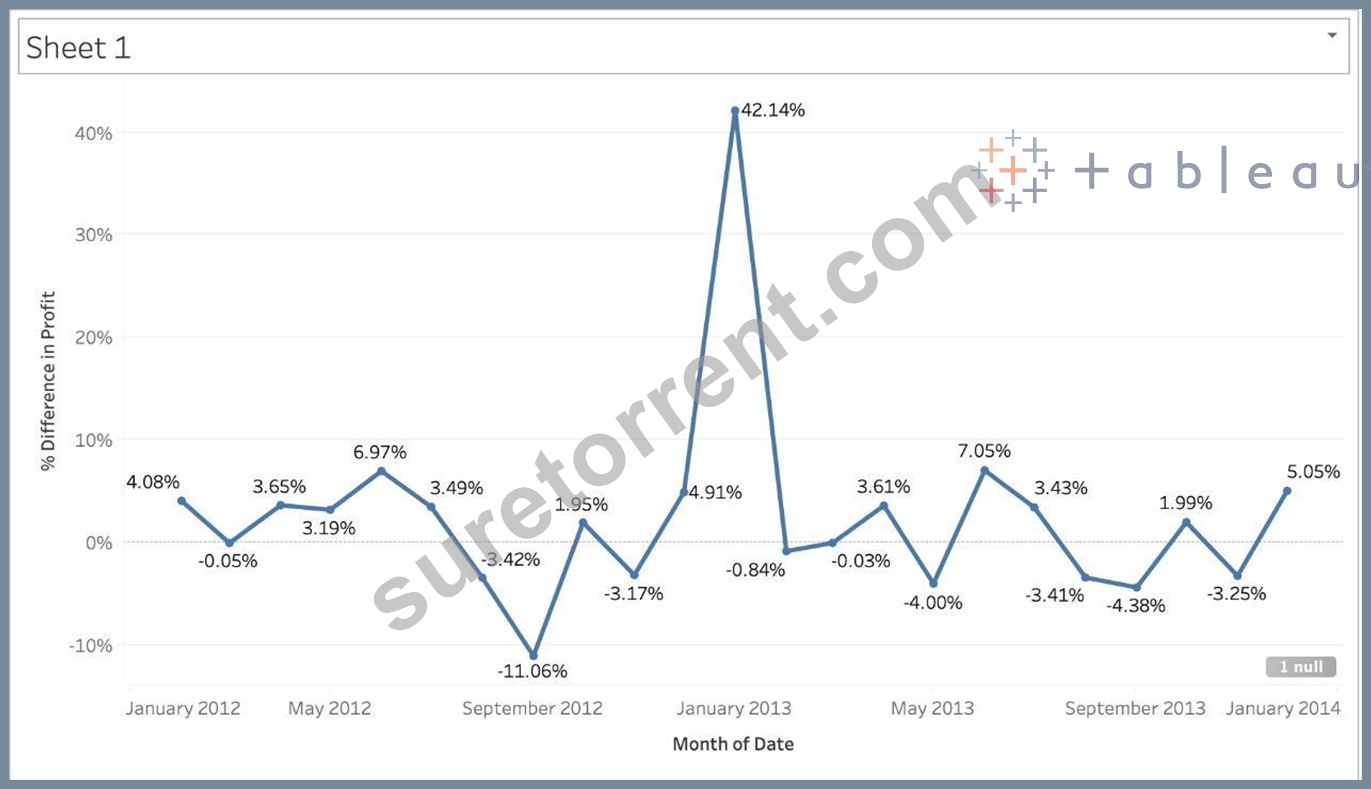
NEW QUESTION 23
_____________ is a snapshot of the data that Tableau stores locally. Good for very large datasets of which we only need few fields.
- A. Tableau Packaged Workbook (.twbx)
- B. Tableau Data Extract (.tde)
- C. Tableau Workbook (.twb)
- D. Tableau Data Source (.tds)
Answer: B
Explanation:
Explanation
Tableau Data Extract (TDE) is a snapshot of the data that Tableau stores locally. Good for very large datasets of which we only need few fields. Performance is optimised because it queries its own database engine instead of the local data source.
When you create an extract of your data, you can reduce the total amount of data by using filters and configuring other limits. After you create an extract, you can refresh it with data from the original data. When refreshing the data, you have the option to either do a full refresh, which replaces all of the contents in the extract, or you can do an incremental refresh, which only adds rows that are new since the previous refresh.
Extracts are advantageous for several reasons:
1) Supports large data sets: You can create extracts that contain billions of rows of data.
2) Fast to create: If you're working with large data sets, creating and working with extracts can be faster than working with the original data.
3) Help improve performance: When you interact with views that use extract data sources, you generally experience better performance than when interacting with views based on connections to the original data.
4) Support additional functionality: Extracts allow you to take advantage of Tableau functionality that's not available or supported by the original data, such as the ability to compute Count Distinct.
5) Provide offline access to your data: Extracts allow you to save and work with the data locally when the original data is not available. For example, when you are traveling.
NEW QUESTION 24
Using the Geo Data table, create a Bar chart showing the In-Stock percentage for each Color. What is the Average In-Stock percentage for the Color Red? Present your answer correctly upto 2 decimal places.
- A. 95.12%
- B. 96.46%
- C. 99.46%
- D. 97.12%
Answer: D
Explanation:
Explanation
Not too tough. Follow along the steps:
* Drag Color to Filter and choose Red:
* 3) Now to display the percentage correctly, lets format it. Click on the In Stock % pill in the Row shelf, and select format:
* And your final view will look like :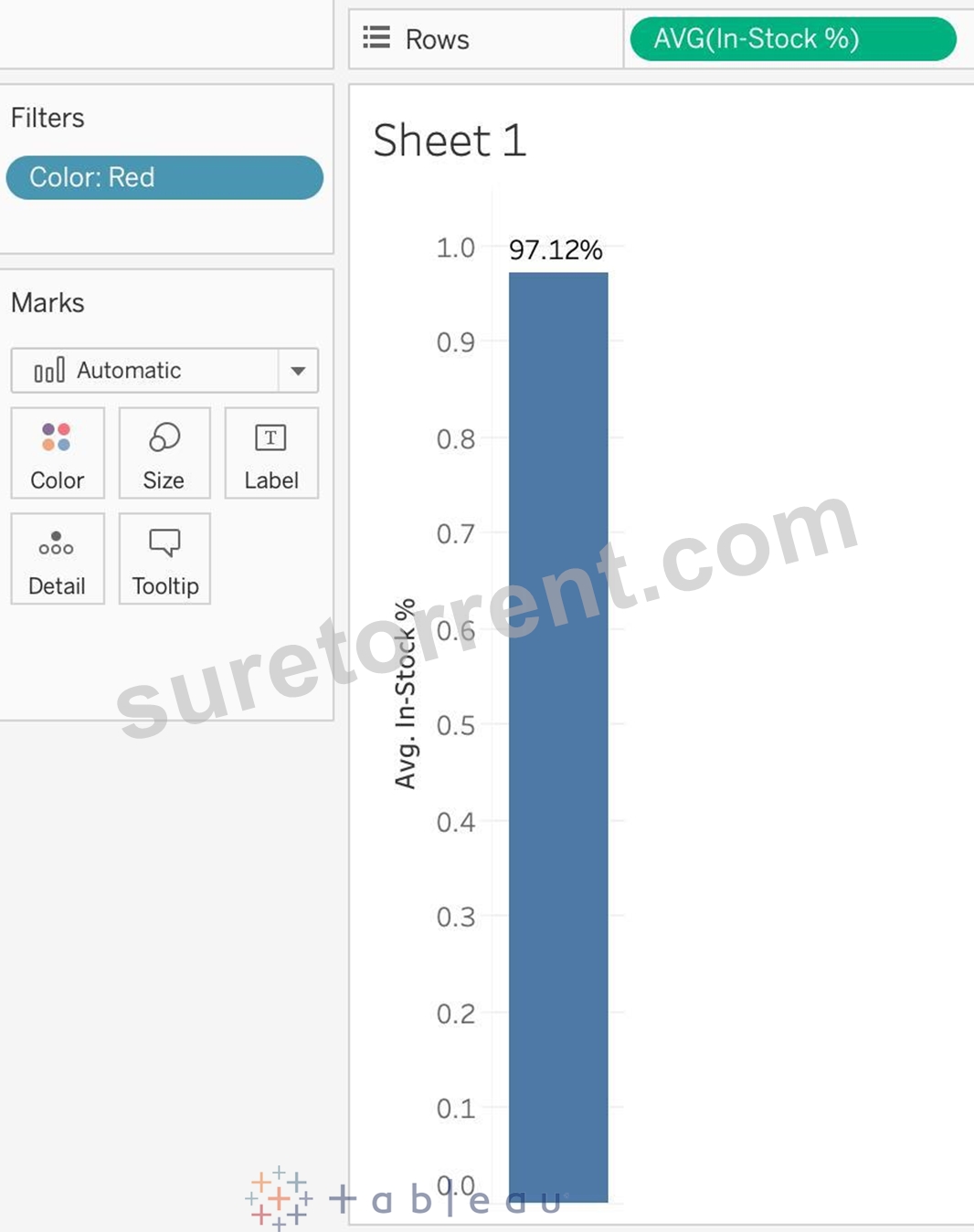
NEW QUESTION 25
The row and column shelves contain ___________________
- A. Parameters
- B. Filters
- C. Pills
- D. Grand Totals
Answer: C
Explanation:
Explanation
We can drag fields from the Data pane to create the structure for your visualizations.
The Columns shelf creates the columns of a table, while the Rows shelf creates the rows of a table. You can place any number of fields on these shelves.
These FIELDS are also referred to as PILLS. See below: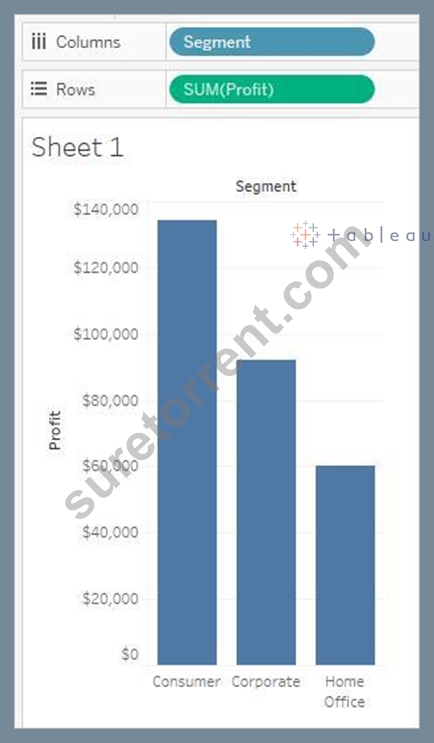
NEW QUESTION 26
True or False: A sheet cannot be used within a story directly. Either sheets should be used within a dashboard, or a dashboard should be used within a story.
- A. False
- B. rue
Answer: A
Explanation:
Explanation
It is possible in Tableau to use a sheet within a story directly.
Moreover, in Tableau, a story is a sequence of visualizations that work together to convey information. You can create stories to tell a data narrative, provide context, demonstrate how decisions relate to outcomes, or to simply make a compelling case.
At the same time, a story is also a collection of sheets, arranged in a sequence. Each individual sheet in a story is called a story point.
NEW QUESTION 27
Create a Set containing Customer Names whose Sales are GREATER than 30,000. Which customer had the LEAST sales in this set?
- A. Tom Ashbrook
- B. Penelope Sewall
- C. Sanjit Engle
- D. Tamara Chand
Answer: B
Explanation:
Explanation
As the question mentions, we need to create a SET with the following conditions -> Choose only those customers whose Sales > 30,000
1) Right click on customer name --> Create --> Set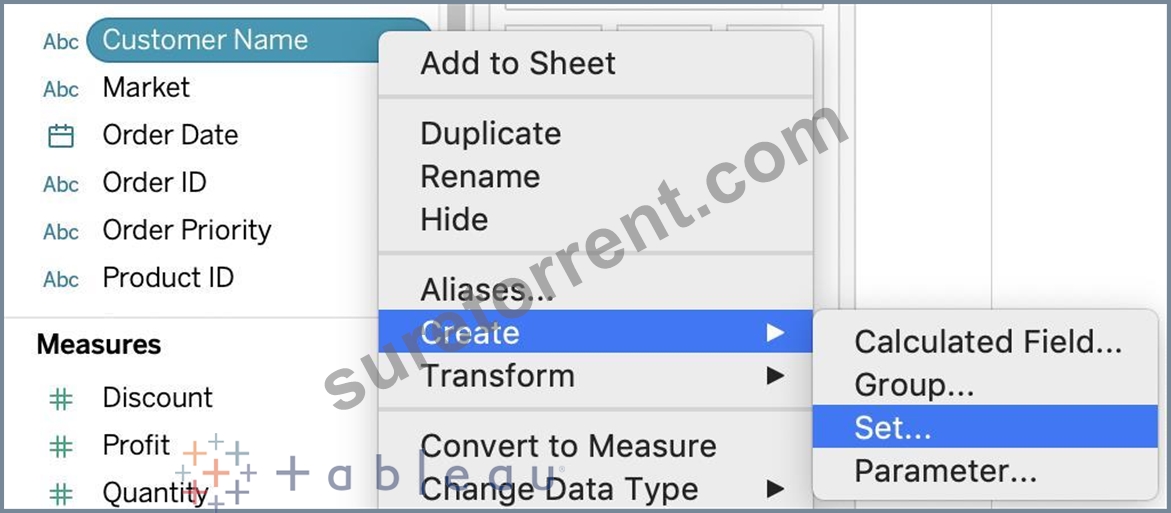
2) Let's Name the Set - Customer>30k ( you can name it anything you want :) ) Select USE ALL, and then move to the CONDITION TAB: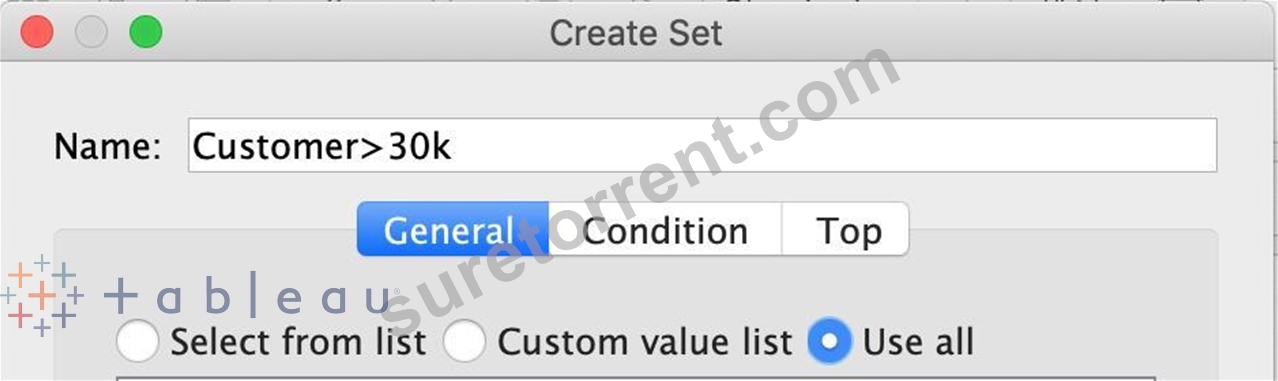
3) In the Condition Tab, Choose BY FIELD -> Select Sales -> Sum -> Greater than 30000 , and click OK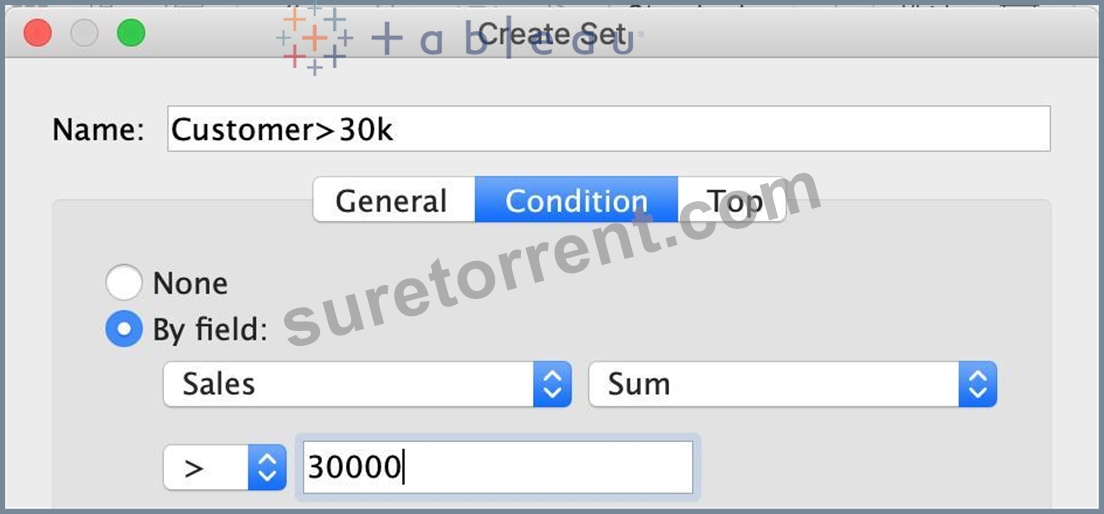
4) You should now have a new Set in the Data Pane as follows: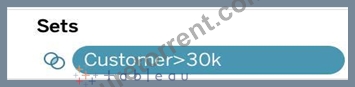
5) Drag this set to the rows shelf, and click on SHOW MEMBERS IN SET. Now drag Sales to the Column Shelf.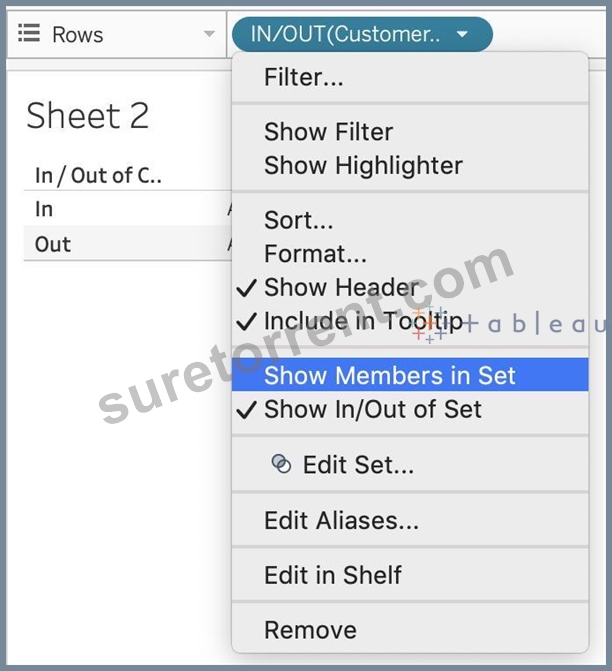
6) Click on the Show Mark Labels, and Sort ascending icons as shown: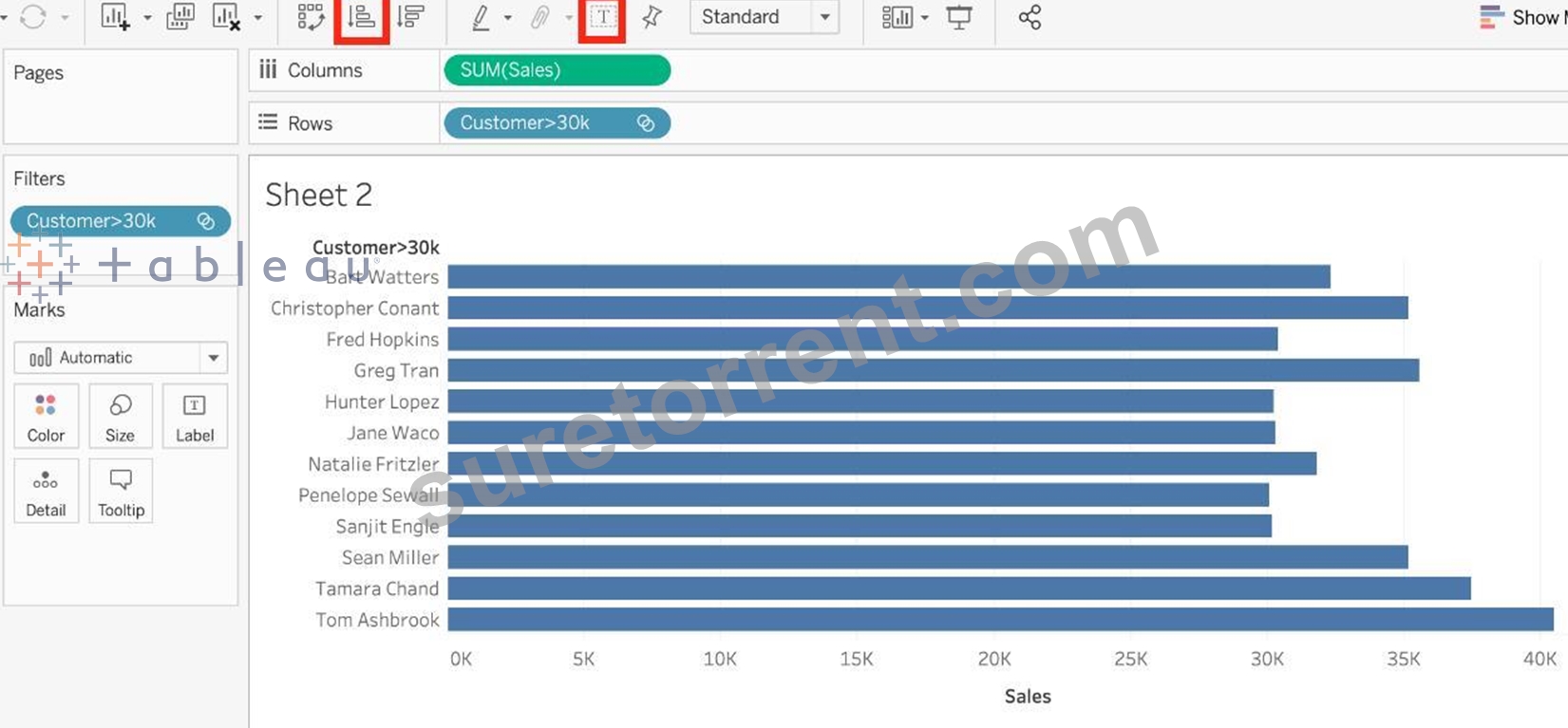
7) Voila! We have our answer:
c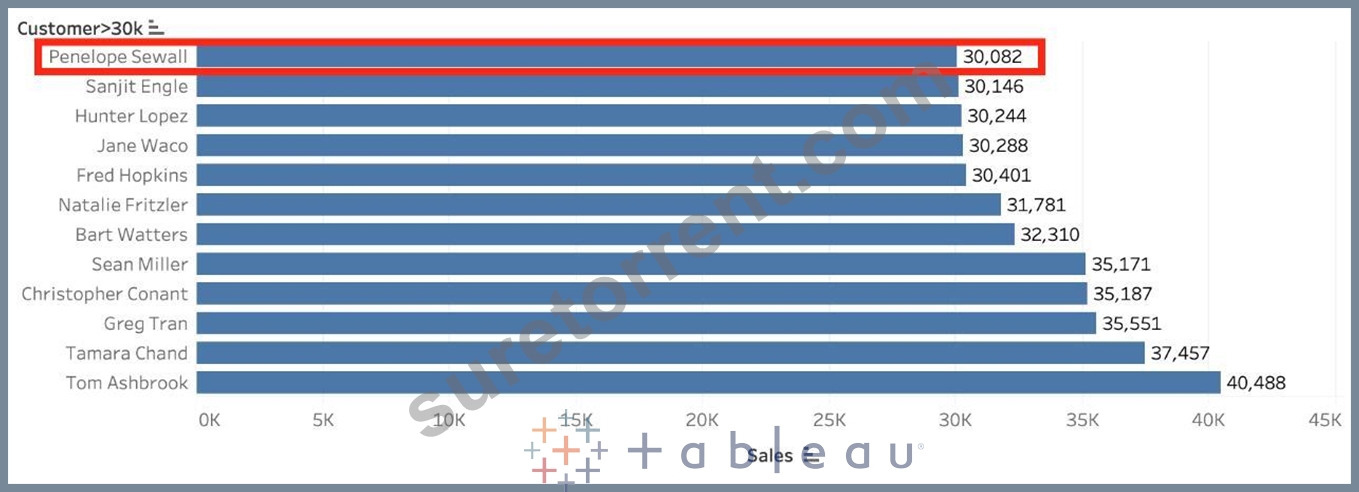
NEW QUESTION 28
Which Sub-Category had the least Profit in the Office Supplies category?
- A. Binders
- B. Labels
- C. Envelopes
- D. Fasteners
Answer: D
Explanation:
Explanation
To reach the correct answer, follow the steps below: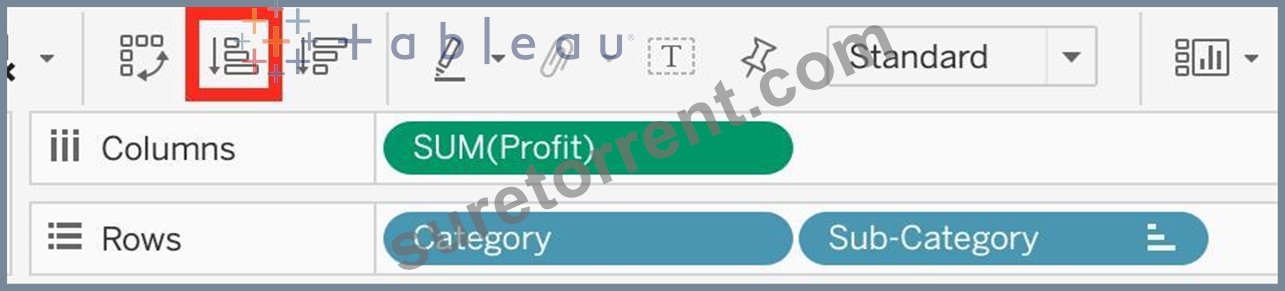
1) Drag Category, and sub-category to the row shelf. Drag Profit to the Column shelf
2) Click the Sort-ascending icon as shown above, to sort the profits from least to greatest as shown:
Click the 'Show mark labels icon'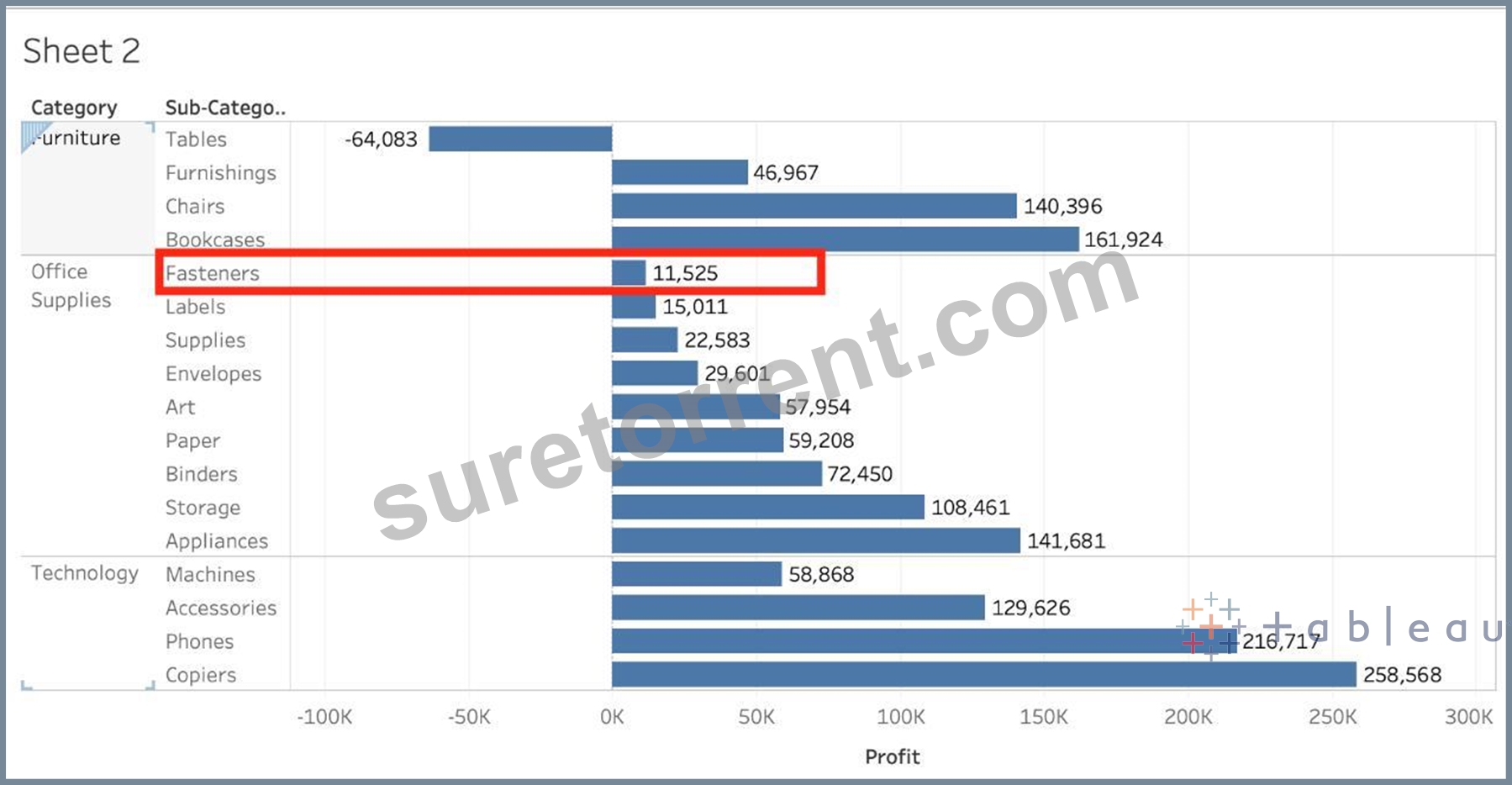
As we can see, Fasteners has the least Profit in the Office Supplies Category, and hence is our correct answer!
NEW QUESTION 29
Using the dataset, plot a Map showing all the countries, filtered by Market to only include LATAM. Which country in the LATAM Market has the highest shipping delay (sum of total number of days between the order date and the ship date)?
- A. Argentina
- B. Peru
- C. Mexico
- D. Brazil
Answer: C
Explanation:
Explanation
VERY IMPORTANT QUESTION FOR THE EXAM, PAY ATTENTION
1) To find the number of days between order date and shipping date, we will make use of a calculated field: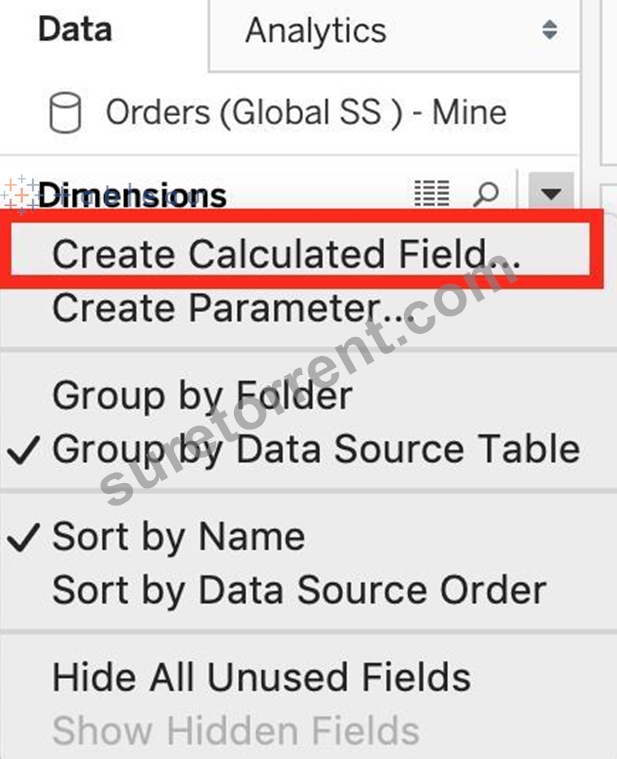
In the data pane, click on the dropdown arrow, and choose create calculated field.
Let's name this calculated field "ShippingDelay" (you can name it anything you want :) )
2) Use the DATEDIFF() function, and pass it the arguments as follows: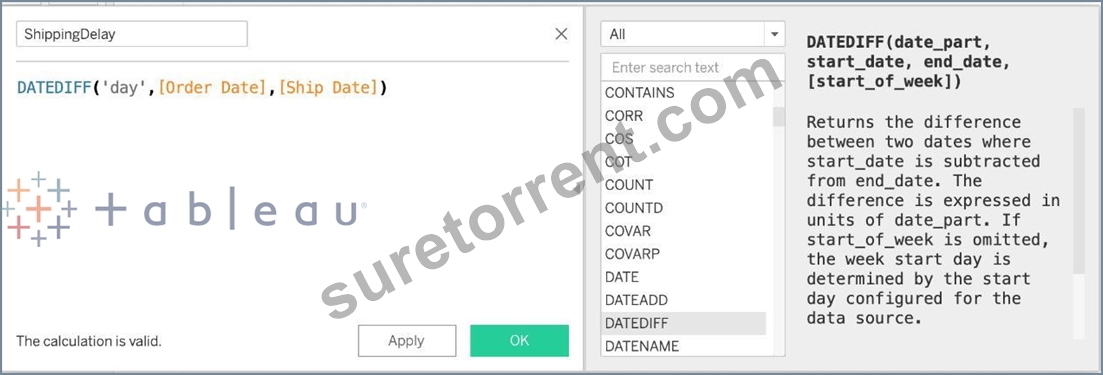
'day' depicts that we want to calculate the number of DAYS between the two dates. The first argument is
'start_date' which is the ORDER_DATE (day the order was placed), the second argument is 'end_date', which is the SHIP_DATE (date the order was shipped). So by subtracting as follows: SHIP_DATE - ORDER_DATE, we can find the delay in shipping.
Click OK.
3) You should now have a new measure as follows: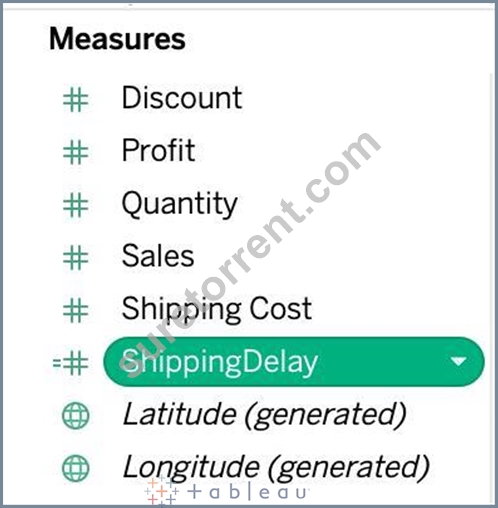
4) Phew! The hard part is done! Now let's filter by Market to include only LATAM: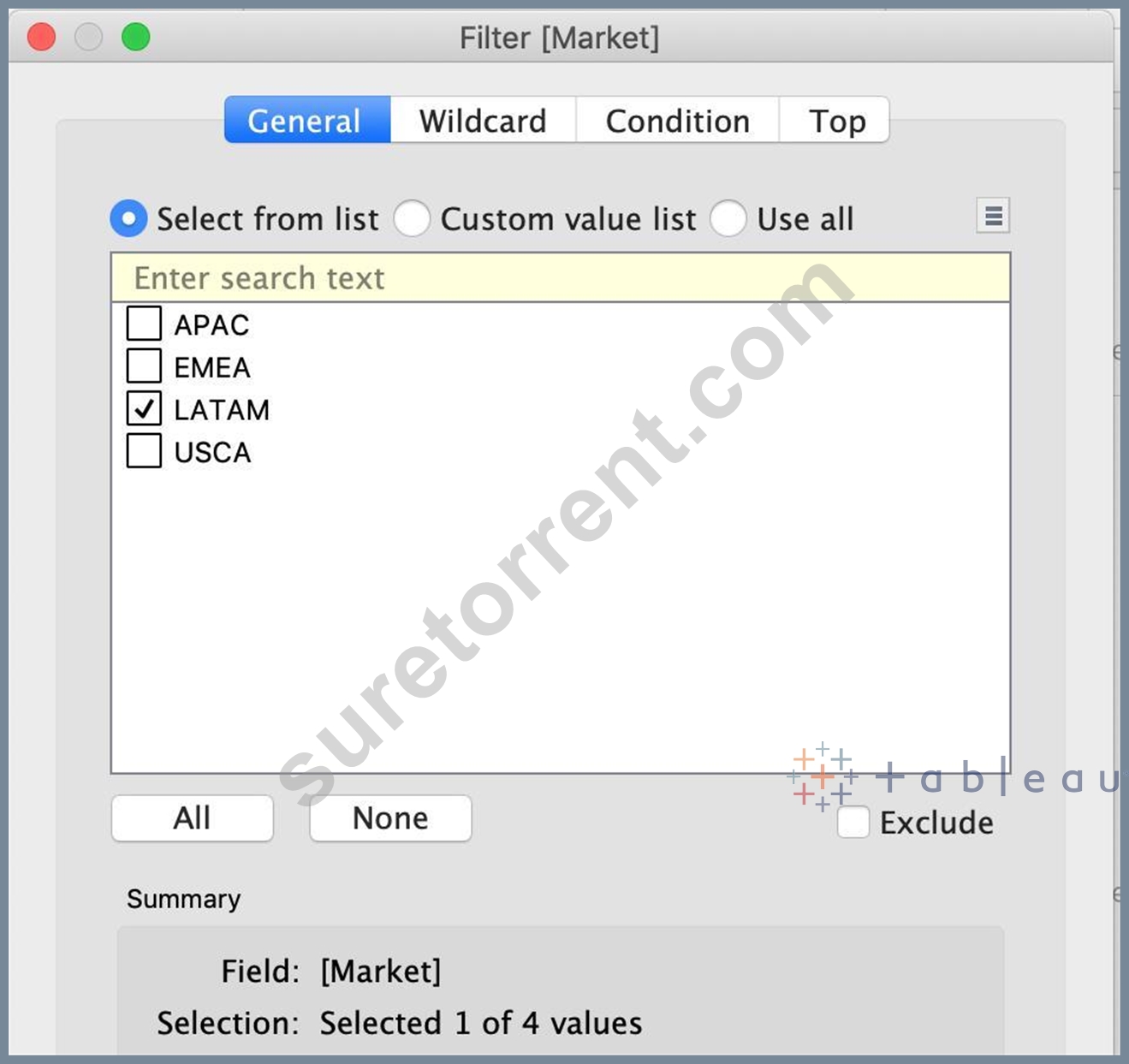
5) Drag Country to the view, and the new calculated field 'ShippingDelay' to SIZE on the Marks Shelf as follows:
*You can also click on Show Text Labels to be sure that you're choosing the Largest value*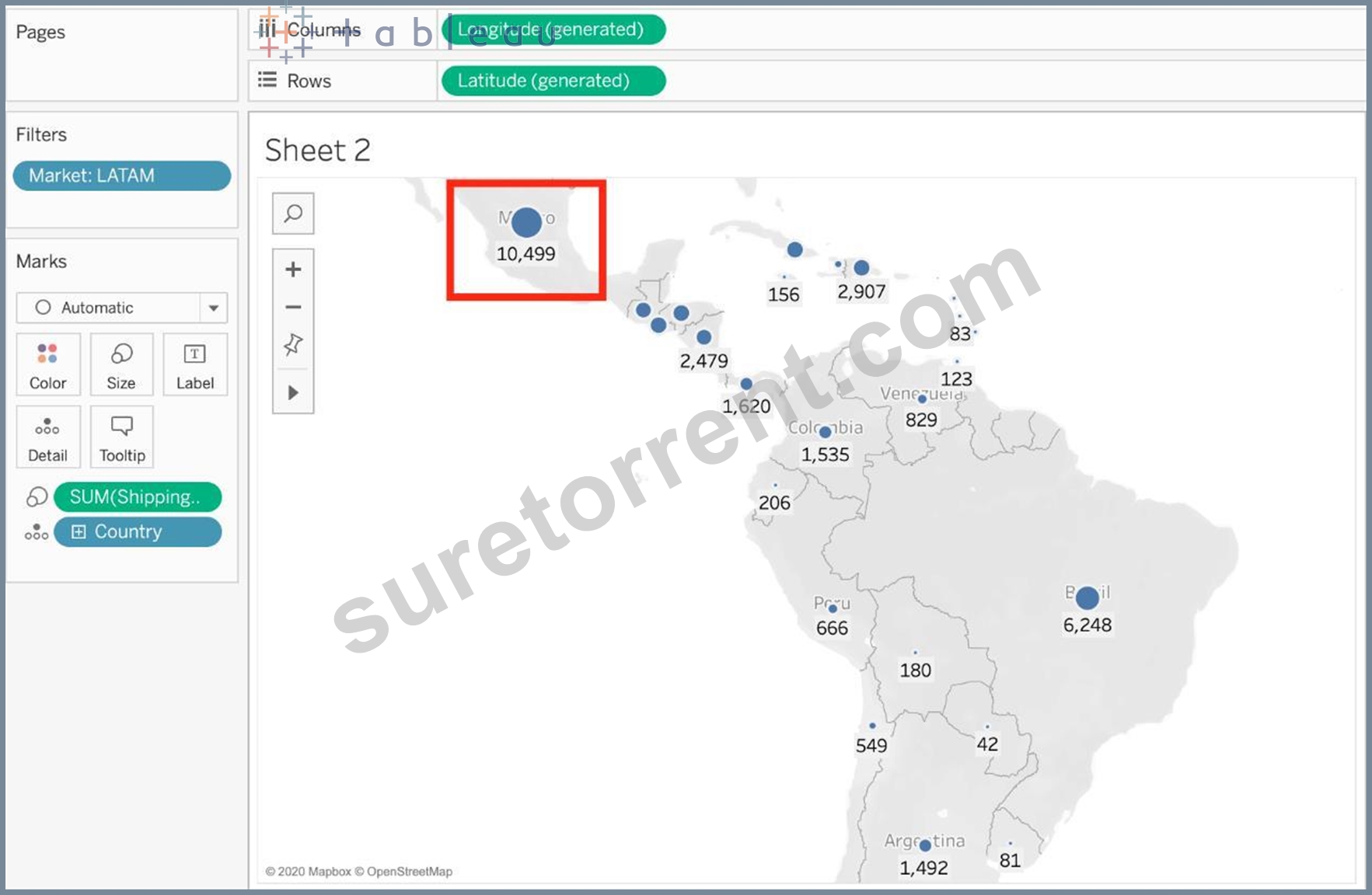
Clearly, Mexico has the highest Shipping Delay!
NEW QUESTION 30
In Tree maps, the size begins with the largest rectangle on the ________________ and the smallest rectangle on the ________________.
- A. top left bottom left
- B. top right, bottom left
- C. top left, bottom right
- D. top right, bottom right
Answer: B
Explanation:
Explanation
Tree maps size begins from maximum in top left to smallest in bottom right.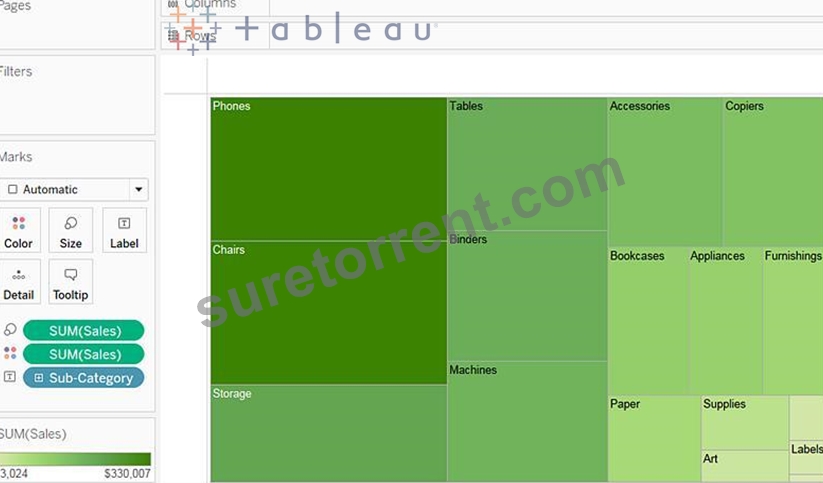
See below to learn how to create a TreeMap and add colours to it:
NEW QUESTION 31
True or False: The Highlighting action can be disabled for the entire workbook.
- A. True
- B. False
Answer: A
Explanation:
Explanation
Yes, it is possible to disable highlighting for the entire workbook.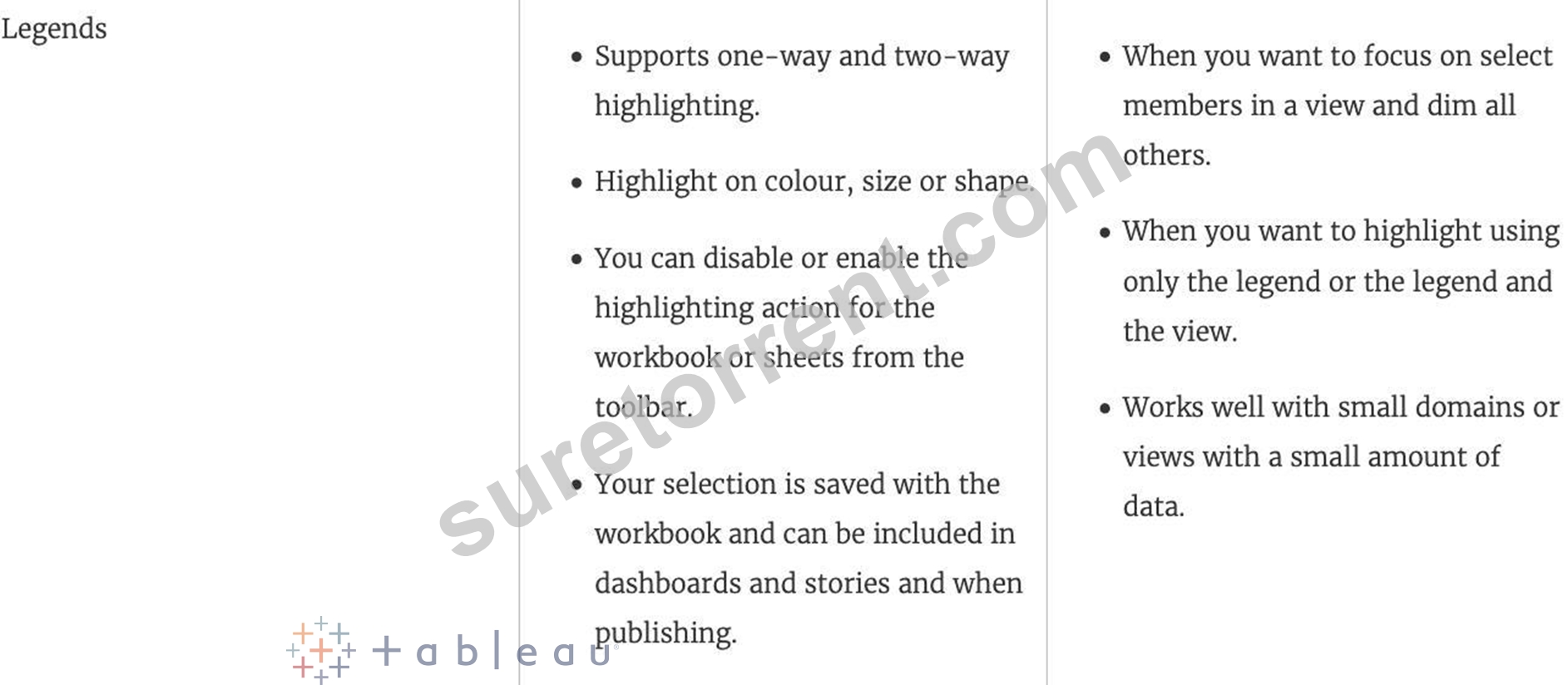
For more information : https://help.tableau.com/current/pro/desktop/en-gb/actions_highlight.htm
NEW QUESTION 32
If you have a dashboard and are displaying its filter, how can you rearrange it?
- A. By clicking on the filter title and dragging it.
- B. By clicking on the 2 lines on top and dragging the filter.
- C. By clicking on the dropdown and dragging the filter
- D. By clicking anywhere inside the filter and dragging it.
Answer: B
Explanation:
Explanation
You can drag the filter by clicking on the 2 lines on top, and then dragging the filter as shown: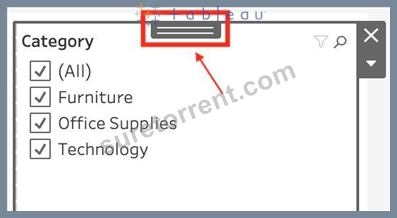
NEW QUESTION 33
......
The benefit of obtaining the Tableau Desktop-Specialist: Tableau Desktop Specialist Exam Certification
Among the rivals are the IT professionals certified by Amazon. When appointing candidates for a job interview employer, Tableau certified development partners would simply provide them with the benefit of informing them of all that makes the candidate vary. Amazon Certified IT professionals have networks more useful and relevant for their career objectives. Tableau Accredited Developer offers you the right professional guidance that you can not usually get without a diploma. Amazon IT professionals who are accredited are positive and distinct from other professionals since they have more experience than uncertified professionals. As most uncertified professionals do not realize, the resource is used rapidly and cost-effectively by AMAZON Accredited IT professionals.
The Tableau Certified Developer certification allows applicants to become professionals in all aspects of their skills. Instead of waiting or finishing years, Tableau certificates for certified production provide a way to find a position in which you compete without any experience.
Desktop-Specialist are Available for Instant Access: https://www.suretorrent.com/Desktop-Specialist-exam-guide-torrent.html
Desktop-Specialist Dumps 2022 - New Tableau Desktop-Specialist Exam Questions: https://drive.google.com/open?id=1o88A1xqS6VfjI7dcdp5b6_5UdIIN2d7L